Drint Knowledge › Packaging glossary › Mould seam
Mould seam
The faint vertical line left on a glass bottle where the halves of the forming mould met, which print zones and labels should avoid.
- Also called
- mold seam, parting line, seam line
- Kind
- Print & finishing
- Container
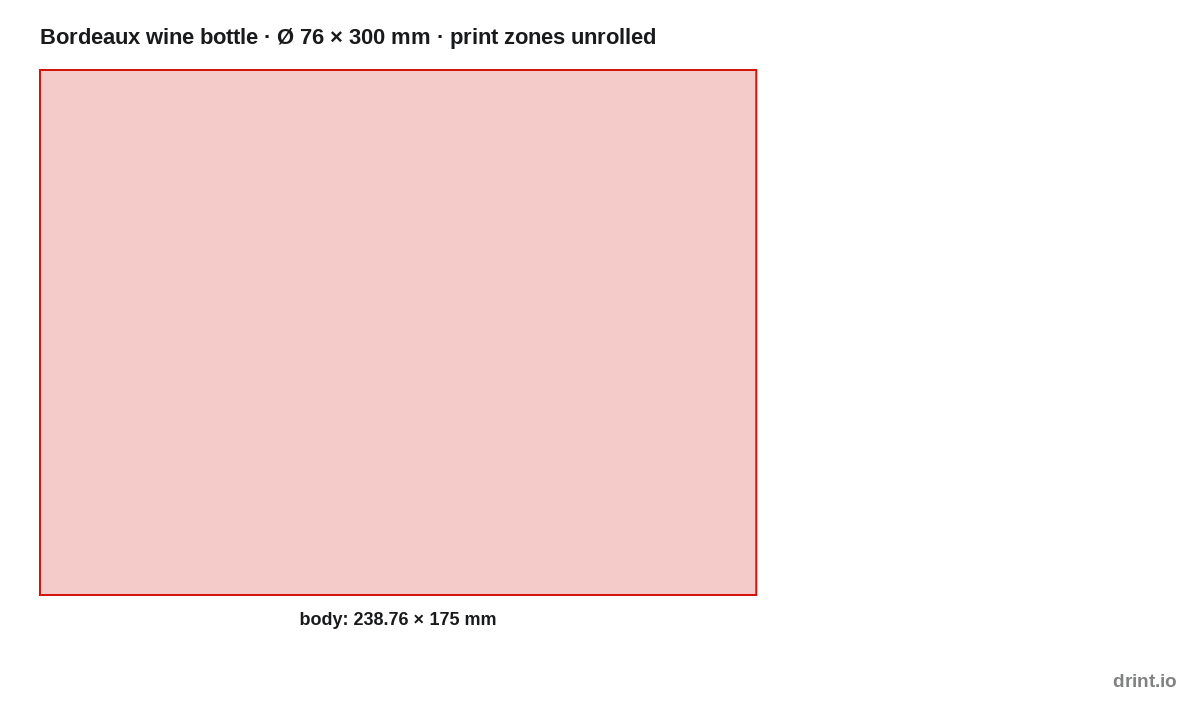
- Bordeaux wine bottle: Ø 76 × 300 mm, 770 ml brim-full
- Print zones (unrolled)
- body: 238.76 × 175 mm
- Mould seams
- yes
- Measured
Bottles are blown in moulds that open in two halves, and the joint leaves a slightly raised line running up the body, shoulder and often the neck. On a screen-printing machine the squeegee and screen pass over that ridge unevenly, so ink can skip, thin out or smear where the art crosses the seam.
Place each print zone between the seams, usually one on the front and one on the back, and leave a clear gap on either side of the seam line. Ask the glassworks or decorator how bottles are oriented on the machine, since many containers have a notch or lug that locks the seam in a known position, and check the artwork against their drawing.
Questions
What is a mould seam?
The faint vertical line left on a glass bottle where the halves of the forming mould met, which print zones and labels should avoid.
More terms
Cite this page: Drint (2026). “Mould seam”. Drint Knowledge. https://drint.io/glossary/mould-seam