Drint Knowledge › Packaging glossary › Offset lithography (sheet-fed)
Offset lithography (sheet-fed)
A printing process in which ink on a flat plate is transferred to a rubber blanket and then onto sheets of paper or board, one press sheet at a time.
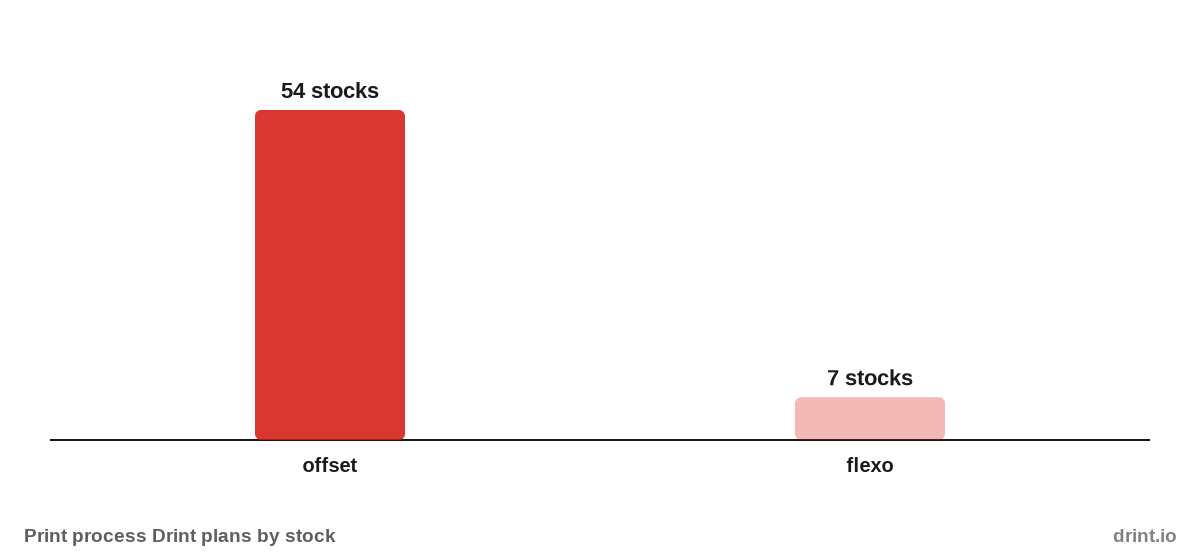
- Also called
- offset printing, sheet-fed offset, litho
- Kind
- Print & finishing
- Stocks per process
- offset: 54
flexo: 7 - Measured
Offset plates are flat: image areas attract greasy ink and non-image areas hold a thin film of water that repels it. The inked image is offset onto a rubber blanket and from there onto the sheet, which lets fine screens, sharp text and smooth tints print well on paper and folding-carton board.
Sheet-fed offset is the usual process for folding cartons, rigid-box wraps, labels on sheets, leaflets and cards, and also for the printed liner that is later laminated onto corrugated board. Design for the press sheet the printer will use, keep bleed and safe margins around every die line, and plan any coating, foil or embossing as separate files aligned to the same die.
Questions
What is a offset lithography (sheet-fed)?
A printing process in which ink on a flat plate is transferred to a rubber blanket and then onto sheets of paper or board, one press sheet at a time.
Is offset worth it for a short run?
Plates and make-ready are a fixed cost, so very short runs are often cheaper on digital presses; offset pays off as quantities rise.
More terms
Cite this page: Drint (2026). “Offset lithography (sheet-fed)”. Drint Knowledge. https://drint.io/glossary/offset-printing