Drint Knowledge › Packaging glossary › Flexography
Flexography
A relief printing process using flexible raised plates and fast-drying inks, widely used for corrugated boxes, labels, films and paper bags.
- Also called
- flexo, flexo printing, flexographic printing
- Kind
- Print & finishing
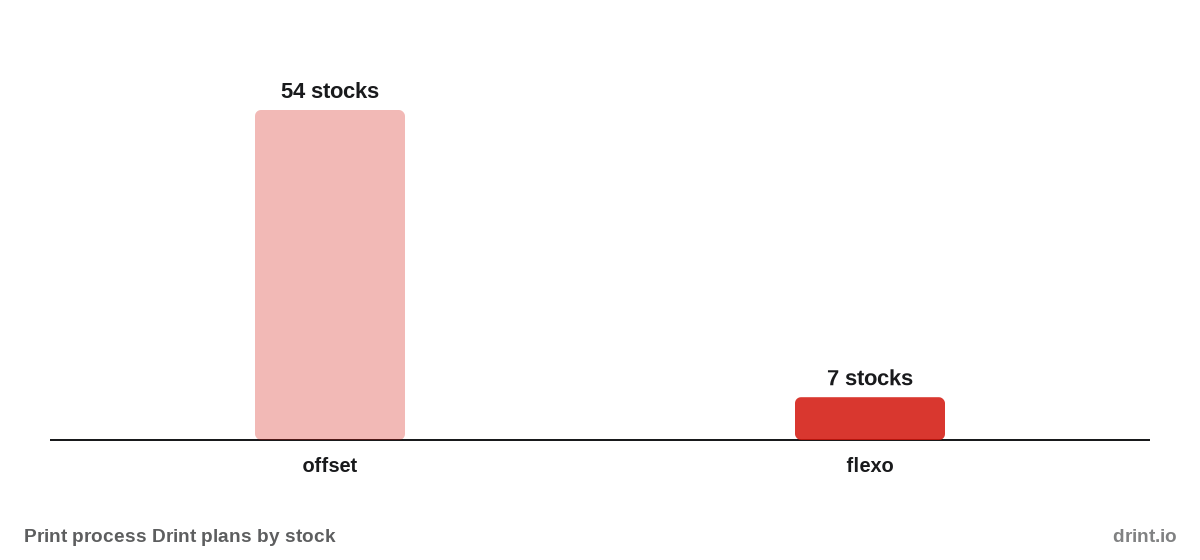
- Stocks per process
- offset: 54
flexo: 7 - Measured
In flexo, the image stands up from a soft photopolymer plate wrapped around a cylinder. A finely engraved anilox roller meters a thin, even film of ink onto the raised areas, which then kiss the substrate; because the plate is flexible and the inks dry quickly, flexo runs well on rough corrugated liners, plastic films and reels of labels.
Flexo dots grow more than offset dots, the smallest printable dot is larger, and registration is looser, so prepress needs more care. Use bolder minimum line weights and text sizes, avoid very fine reversed type, allow wider traps, and expect the printer to stretch the art slightly in the print direction to make up for the plate wrapping around the cylinder.
Questions
What is a flexography?
A relief printing process using flexible raised plates and fast-drying inks, widely used for corrugated boxes, labels, films and paper bags.
Why do my light tints disappear in flexo?
Flexo cannot hold very small dots, so the lightest tints either drop out or jump to a visible minimum dot; keep important tints above the printer’s stated minimum.
More terms
Cite this page: Drint (2026). “Flexography”. Drint Knowledge. https://drint.io/glossary/flexographic-printing