Drint Knowledge › Packaging glossary › Direct-to-film transfer
Direct-to-film transfer
A transfer method that prints the design onto a special film with a white backing and adhesive powder, then heat-presses it onto the product.
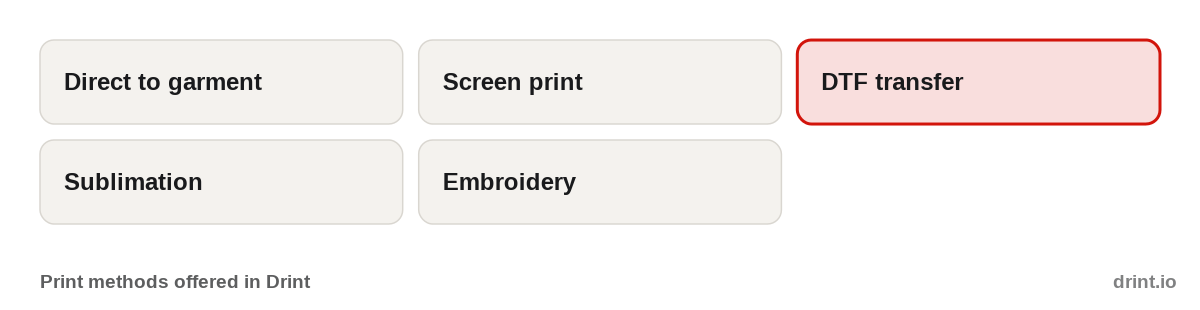
- Also called
- DTF, DTF transfer, film transfer printing
- Kind
- Print & finishing
- Options in Drint
- 5
- Measured
An inkjet printer lays colour and then white ink onto a PET film, an adhesive powder is shaken onto the wet ink and cured, and the finished transfer is pressed onto the item with heat. The film is peeled away, leaving a flexible, opaque print that sits on top of the fabric.
Supply a high-resolution image with a transparent background, typically around 300 ppi at final size, and remove stray pixels or semi-transparent shadows, since anything visible becomes a printed film edge. Very thin isolated details may lift over time, so keep small elements connected or a little bolder. DTF works on cotton, polyester, blends and many other materials, and suits full-colour designs in small runs on dark or light items.
Questions
What is a direct-to-film transfer?
A transfer method that prints the design onto a special film with a white backing and adhesive powder, then heat-presses it onto the product.
More terms
Cite this page: Drint (2026). “Direct-to-film transfer”. Drint Knowledge. https://drint.io/glossary/dtf-printing