Drint Knowledge › Packaging glossary › Wrap-around case
Wrap-around case
A corrugated case formed by folding a single flat blank around the product, so the box is built and closed around its contents in one step.
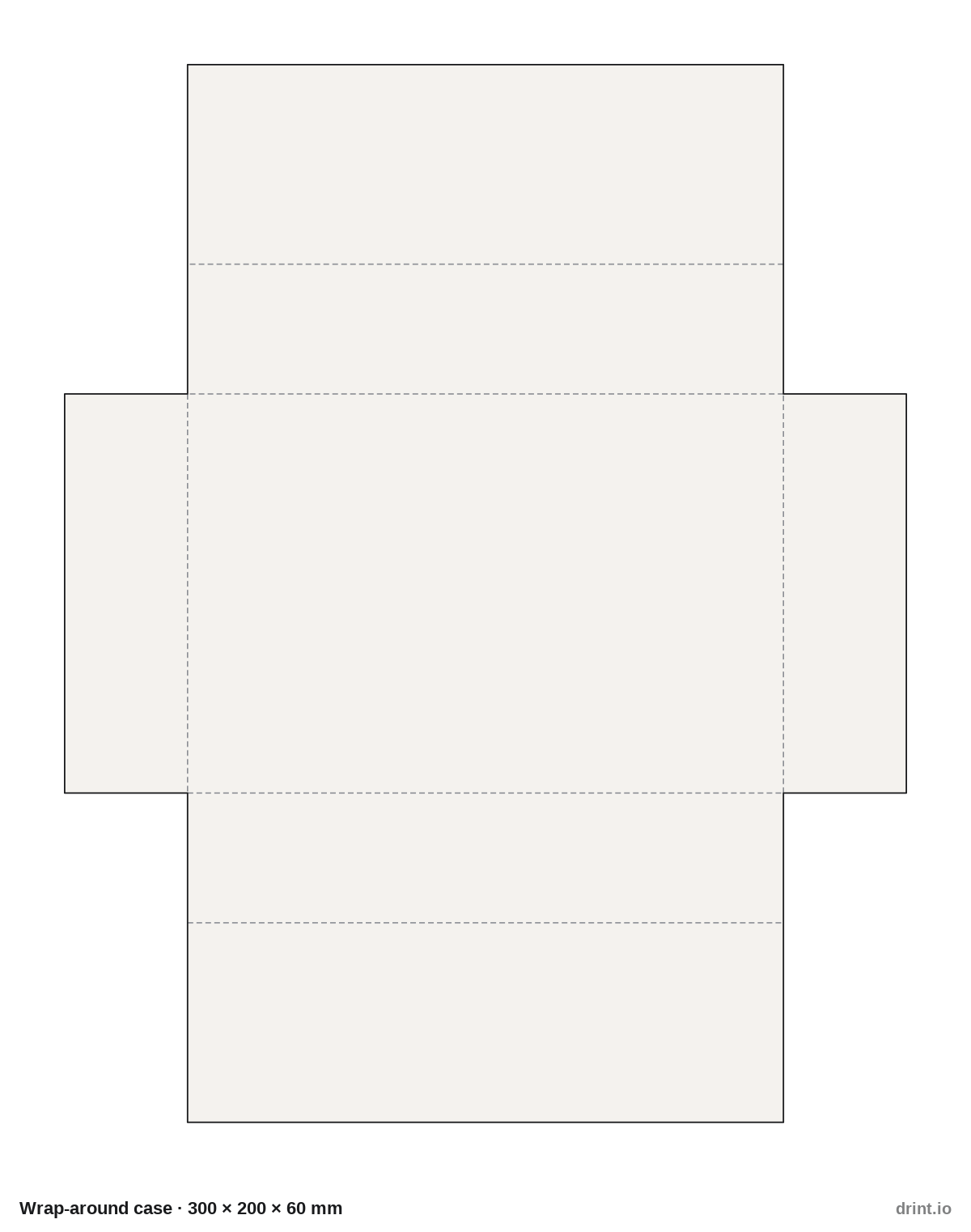
- Also called
- wraparound carton, wrap-around blank
- Kind
- Pack styles
- Variants Drint draws
- 1
- Default size
- 300 × 200 × 60 mm
- Flat blank
- 428 × 538 mm
- Blank area
- 0.188 m²
- Cutting rule
- 1.93 m
- Creasing rule
- 1.62 m
- Measured
The blank is laid flat, the product is placed on the base panel, and the front, back, ends and lid panels are folded up and over it before the final joint is glued or tucked. Because the box is formed tightly around the load, there is little empty space.
Wrap-around cases are typical for books, flat goods and high-speed packing of cans or bottles, where a machine folds and glues the case in line. A tight fit saves board and void fill, but the blank size must follow the product size closely.
Questions
What is a wrap-around case?
A corrugated case formed by folding a single flat blank around the product, so the box is built and closed around its contents in one step.
More terms
Cite this page: Drint (2026). “Wrap-around case”. Drint Knowledge. https://drint.io/glossary/wrap-around-case