Drint Knowledge › Packaging glossary › Red envelope
Red envelope
A small decorative envelope, traditionally red and gold, used in East and Southeast Asia to give money as a gift at Lunar New Year and celebrations.
- Also called
- lucky money envelope, hongbao, lì xì envelope
- Kind
- Pack styles
- Variants Drint draws
- 11
- Default size
- 90 × 0 × 170 mm
- Flat blank
- 120 × 350 mm
- Blank area
- 0.034 m²
- Cutting rule
- 0.85 m
- Creasing rule
- 0.52 m
- Measured
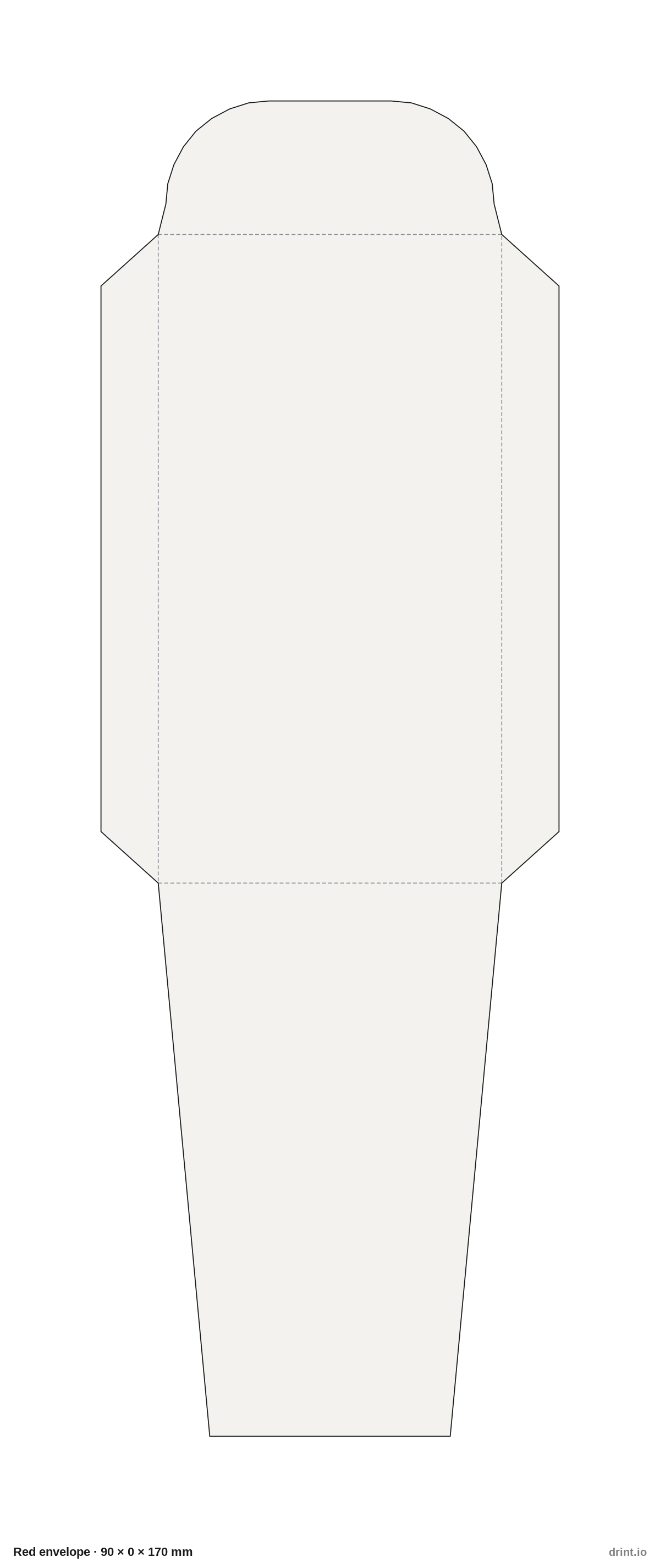
Most red envelopes are tall, narrow pockets sized for folded or flat banknotes, with glued side flaps and a rounded or straight top flap left unsealed. Some styles skip glue entirely and close with a tuck tab.
Brands, banks and shops order them in large quantities as New Year gifts, so they are a classic seasonal print job. Gold foil, embossing and auspicious motifs are typical; size the pocket to the local banknotes so they fit without folding twice.
Questions
What is a red envelope?
A small decorative envelope, traditionally red and gold, used in East and Southeast Asia to give money as a gift at Lunar New Year and celebrations.
More terms
Cite this page: Drint (2026). “Red envelope”. Drint Knowledge. https://drint.io/glossary/red-envelope