Drint Knowledge › Packaging glossary › Nesting
Nesting
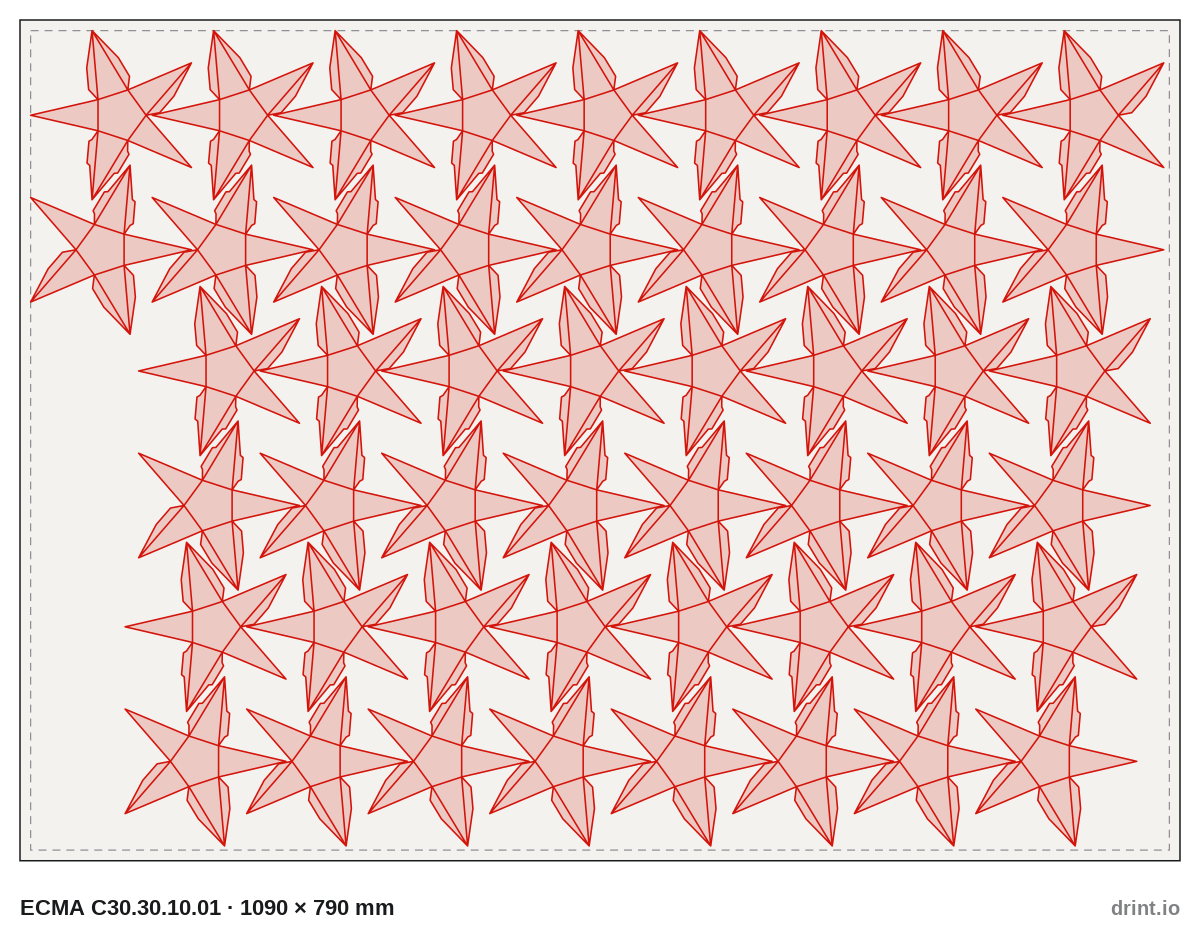
Laying copies of a die on the sheet so their flaps fit into each other’s gaps — often turned 180° — to get more copies per sheet than a plain grid.
- Also called
- interlocking layout, die nesting, head-to-head layout
- Kind
- Die & press
- Where Drint finds it
- 411 of the 975 codes that fit a press sheet gain copies
- Measured
A grid places blanks by their bounding boxes. Nesting moves each copy until it touches the one beside it, so tuck flaps slip between tuck flaps and a reverse tuck end sits head to head with the next.
The gain depends on the shape: a straight tube gains nothing, a carton with deep flaps can gain one or two copies a sheet — over a run of 50,000 that is real board.
Open ECMA C30.30.10.01 in the studio
Codes that gain from nesting
Questions
What is a nesting?
Laying copies of a die on the sheet so their flaps fit into each other’s gaps — often turned 180° — to get more copies per sheet than a plain grid.
More terms
Cite this page: Drint (2026). “Nesting”. Drint Knowledge. https://drint.io/glossary/nesting