Drint Knowledge › Packaging glossary › Nick (tie)
Nick (tie)
A tiny uncut gap ground into a cutting rule so each blank stays attached to the sheet until the waste is stripped.
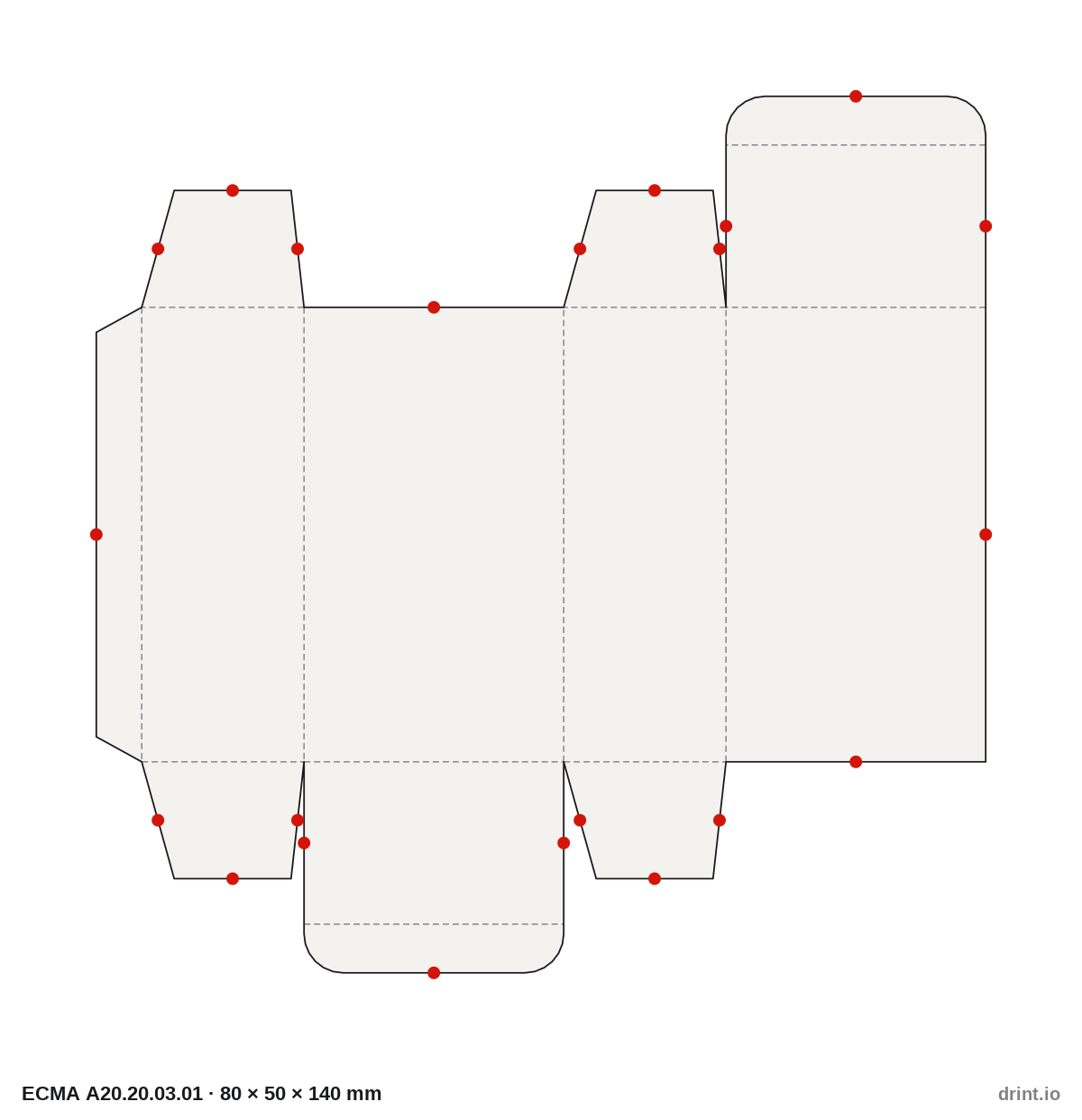
- Also called
- nick, tie, tie point, nicking
- Kind
- Die & press
- Nicks on ECMA A20.20.03.01
- 22
- Drawn on
- ECMA A20.20.03.01
- Measured
Nicks are small notches in the steel cutting rule, leaving short bridges of uncut board along the cut line. They hold the blanks in the sheet as it travels through the die-cutter and stripping station, and are broken when the blanks are separated.
Each nick leaves a small rough tab on the finished edge, so die makers place them where they are least visible, such as on glue flaps, dust flaps or inside edges, and away from front panels and tear strips. Thicker boards and corrugated usually need wider or more nicks, which is a die-shop decision based on the sheet layout.
Open ECMA A20.20.03.01 in the studio
Questions
What is a nick (tie)?
A tiny uncut gap ground into a cutting rule so each blank stays attached to the sheet until the waste is stripped.
More terms
Cite this page: Drint (2026). “Nick (tie)”. Drint Knowledge. https://drint.io/glossary/nick