Drint Knowledge › Packaging glossary › Rotogravure
Rotogravure
An intaglio printing process in which the image is engraved as tiny cells into metal cylinders that fill with ink, used for long runs on plastic films and foils.
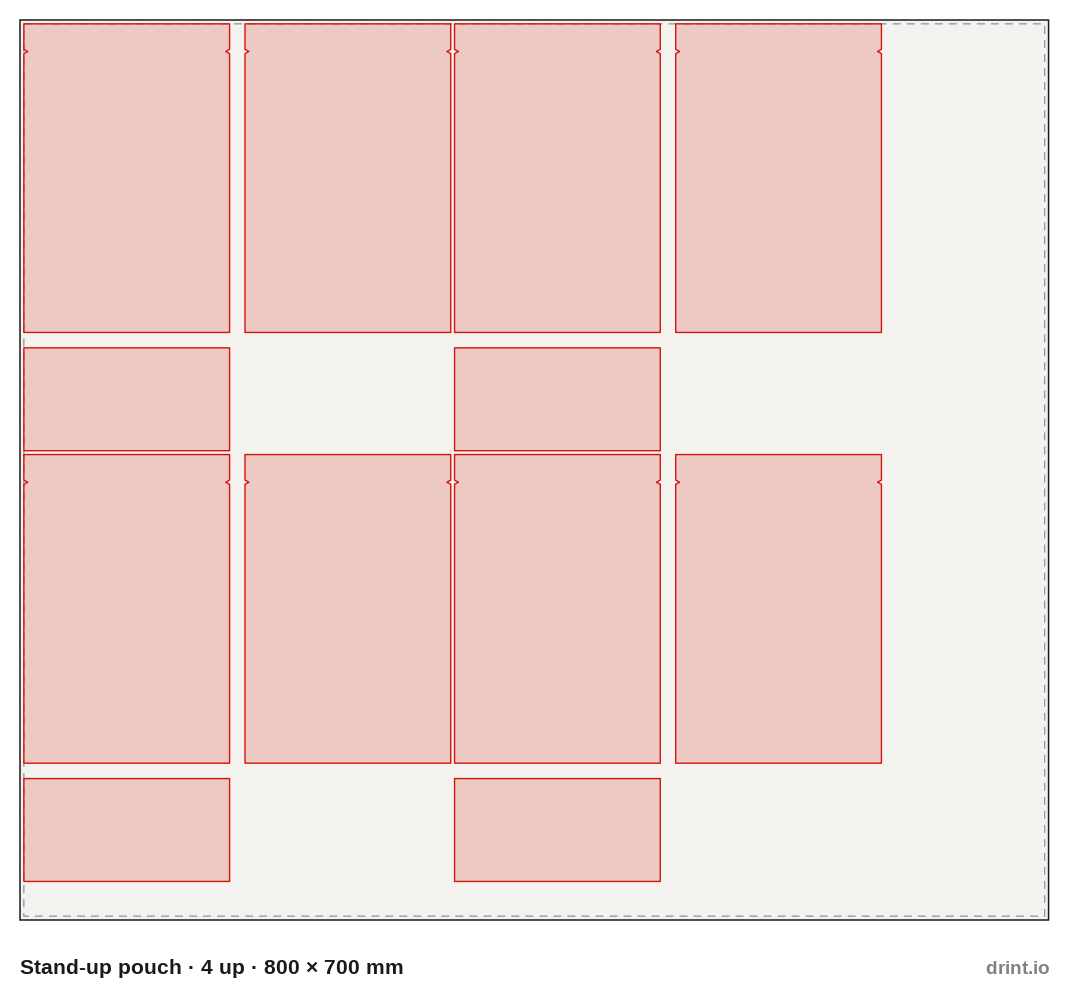
- Also called
- gravure, roto, gravure printing
- Kind
- Die & press
- Sheet or roll
- 800 × 700 mm · margin 3 mm, 3 mm between copies
- Copies
- 4
- Area used
- 64.0%
- Rule on the whole form
- 15.16 m
- Measured
Each colour has its own copper-plated, chrome-faced cylinder with the image engraved as cells of varying depth or size. The cylinder turns through liquid ink, a doctor blade wipes the surface clean, and the ink left in the cells transfers to the film under pressure, giving rich, consistent colour at high speed over very long runs.
Gravure is the classic process for printed laminates on pouches, sachets and wrappers, where film is often reverse-printed on the inside of a clear layer and backed with white before lamination. Because each cylinder is costly to make and fixed in circumference, design the film to the printer’s web width and repeat, plan the white and any windows carefully, and reuse cylinders across variants where you can.
Questions
What is a rotogravure?
An intaglio printing process in which the image is engraved as tiny cells into metal cylinders that fill with ink, used for long runs on plastic films and foils.
Why is gravure expensive for small orders?
Every colour needs its own engraved metal cylinder, so tooling cost is high and is only spread thin over long runs.
More terms
Cite this page: Drint (2026). “Rotogravure”. Drint Knowledge. https://drint.io/glossary/gravure-printing