Drint Knowledge › Packaging glossary › Bleed
Bleed
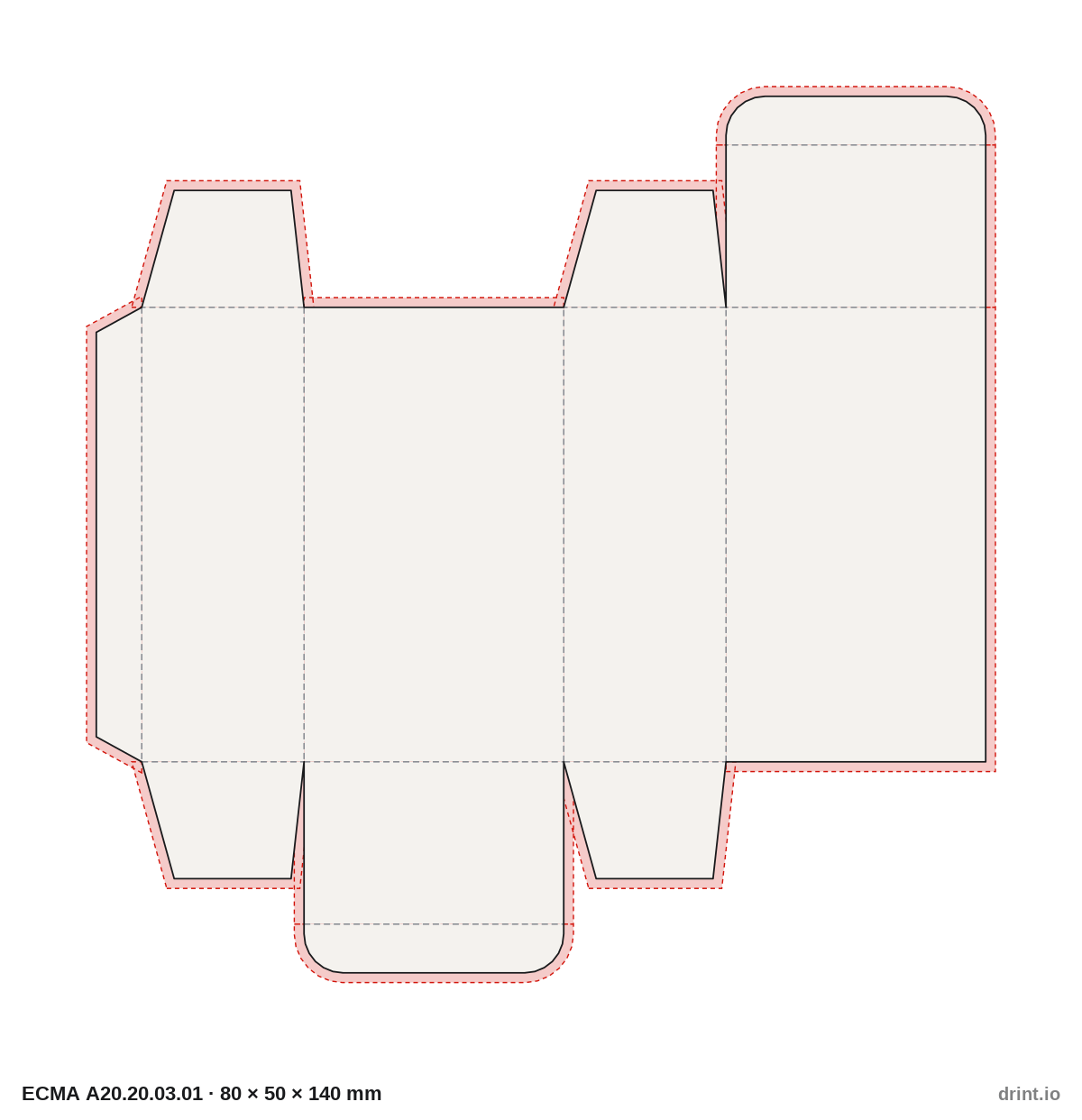
Extra artwork extended past the cut line so that small shifts in cutting never leave unprinted paper at the edge.
- Also called
- bleed area, print bleed, bleed margin
- Kind
- Die & press
- Bleed Drint adds
- 3 mm
- Drawn on
- ECMA A20.20.03.01
- Measured
Cutting and die-cutting always move by a small amount from sheet to sheet, so backgrounds and images that touch an edge are carried beyond the cut line. A bleed of about 3 mm is a common default for print, though some printers ask for more on boxes and corrugated.
On a dieline, bleed runs around the outside cut edges, including flaps and windows, but not across crease lines, where the artwork simply continues onto the next panel. Keep text and logos inside a safe margin on the other side of the cut, since anything placed in the bleed will be trimmed away.
Open ECMA A20.20.03.01 in the studio
Questions
What is a bleed?
Extra artwork extended past the cut line so that small shifts in cutting never leave unprinted paper at the edge.
Do I need bleed on glue flaps?
Glue areas are often left unprinted so the glue holds, but where a background reaches a cut edge on any flap, extend it into the bleed.
More terms
Cite this page: Drint (2026). “Bleed”. Drint Knowledge. https://drint.io/glossary/bleed