Drint Knowledge › Packaging glossary › Hanji paper
Hanji paper
A traditional Korean paper made from the inner bark of the dak (paper mulberry) tree, known for strength and durability.
- Also called
- Korean paper, dak paper, Korean mulberry paper
- Kind
- Board & materials
- Weights in Drint
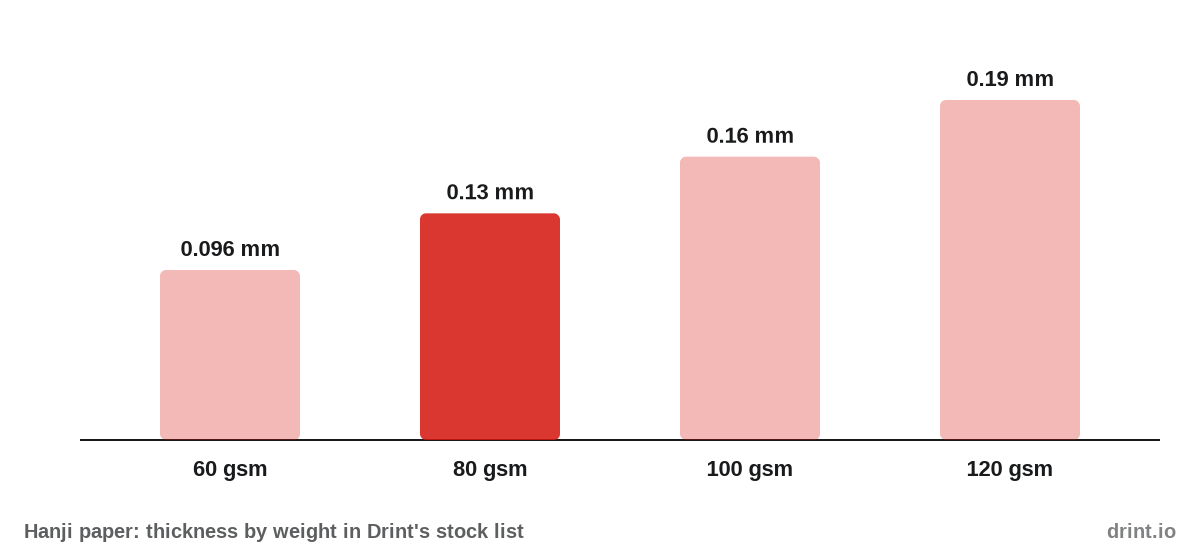
- 60 gsm → 0.096 mm
80 gsm → 0.128 mm
100 gsm → 0.16 mm
120 gsm → 0.192 mm - Measured
Hanji is formed from long mulberry bark fibres, traditionally in layered sheets, which makes it tough, flexible and long-lasting. It has a warm natural tone, visible fibres and a soft, slightly irregular surface.
It suits Korean gift sets, tea and ginseng boxes, cosmetics wraps, labels and box linings. As with other handmade papers, the absorbent surface favours simple artwork, screen print, letterpress or foil, and sheets should be mounted on board for rigid boxes rather than folded alone.
Caliper = weight × 1.6 ÷ 1,000: the thickness Drint’s die engine allows at every fold for this stock.
Questions
What is a hanji paper?
A traditional Korean paper made from the inner bark of the dak (paper mulberry) tree, known for strength and durability.
More terms
Cite this page: Drint (2026). “Hanji paper”. Drint Knowledge. https://drint.io/glossary/hanji-paper