Drint Knowledge › Packaging glossary › Grey back vs white back
Grey back vs white back
The two common backs of carton board: grey back (recycled fibre, as in duplex) and white back (bleached, as in ivory).
- Also called
- GD board, GC board, grey-back duplex, white-back board
- Kind
- Board & materials
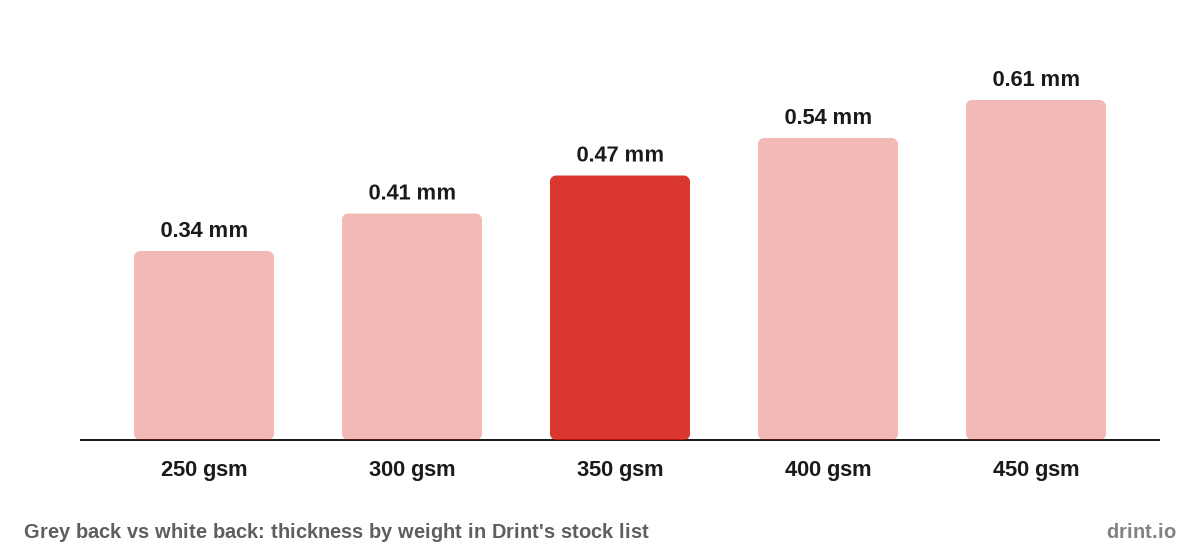
- Weights in Drint
- 250 gsm → 0.338 mm
300 gsm → 0.405 mm
350 gsm → 0.473 mm
400 gsm → 0.54 mm
450 gsm → 0.608 mm - Product types that start on it
- 23
- Measured
Grey-back boards use recycled fibre in the middle and back layers, which keeps cost down and gives good bulk, but the inside of the box shows grey. White-back boards are made from bleached or virgin fibre throughout, so both faces are clean white.
Choose white back when the inside of the carton is visible, such as tuck-end cosmetics boxes, open trays and inside-printed boxes, or for direct food contact where virgin fibre is required. Grey back suits cost-sensitive outer cartons and boxes that are closed and discarded, and it is usually printed on the white face only.
Caliper = weight × 1.35 ÷ 1,000: the thickness Drint’s die engine allows at every fold for this stock.
Questions
What is a grey back vs white back?
The two common backs of carton board: grey back (recycled fibre, as in duplex) and white back (bleached, as in ivory).
Can I print inside a duplex box?
The grey back takes ink poorly and dulls colours, so for inside print choose a white-back board like ivory.
More terms
Cite this page: Drint (2026). “Grey back vs white back”. Drint Knowledge. https://drint.io/glossary/grey-back-vs-white-back