Drint Knowledge › Packaging glossary › Document pocket
Document pocket
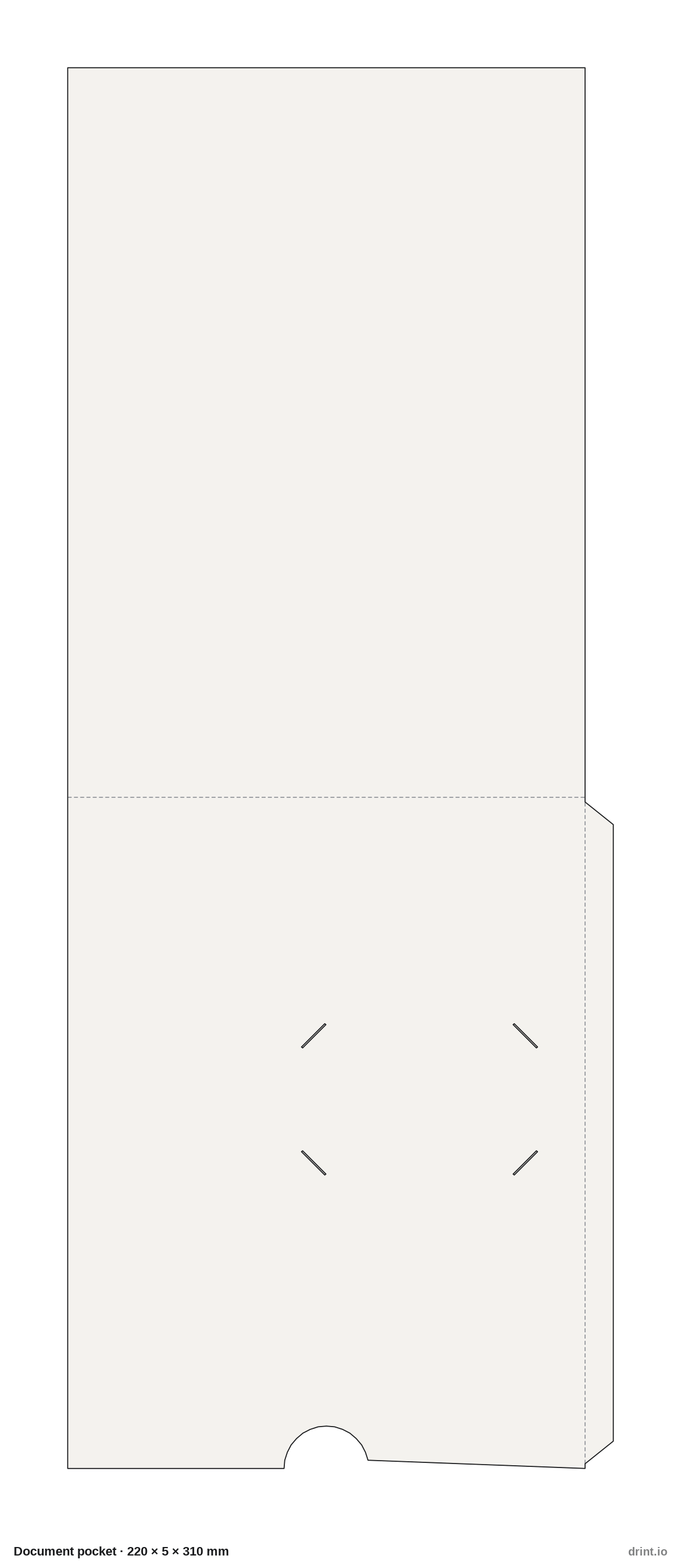
A simple paperboard pocket made of a back panel and a front panel glued at the sides, open along the top with a thumb notch for pulling papers out.
- Also called
- file pocket, document sleeve, paper file jacket
- Kind
- Pack styles
- Variants Drint draws
- 10
- Default size
- 220 × 5 × 310 mm
- Flat blank
- 232 × 595 mm
- Blank area
- 0.134 m²
- Cutting rule
- 1.78 m
- Creasing rule
- 0.50 m
- Measured
The front panel is cut lower than the back or carries a curved notch so papers are easy to grip, and a side glue tab joins the two panels. There is no spine, so the pocket stays thin and slips into a drawer, binder or larger folder.
Document pockets are used for tickets, contracts, warranty papers and inserts that travel with a product. They are cheap to make and easy to brand, but they do not close, so contents can slide out if turned over.
Questions
What is a document pocket?
A simple paperboard pocket made of a back panel and a front panel glued at the sides, open along the top with a thumb notch for pulling papers out.
More terms
Cite this page: Drint (2026). “Document pocket”. Drint Knowledge. https://drint.io/glossary/document-pocket