Drint Knowledge › Packaging glossary › Spine
Spine
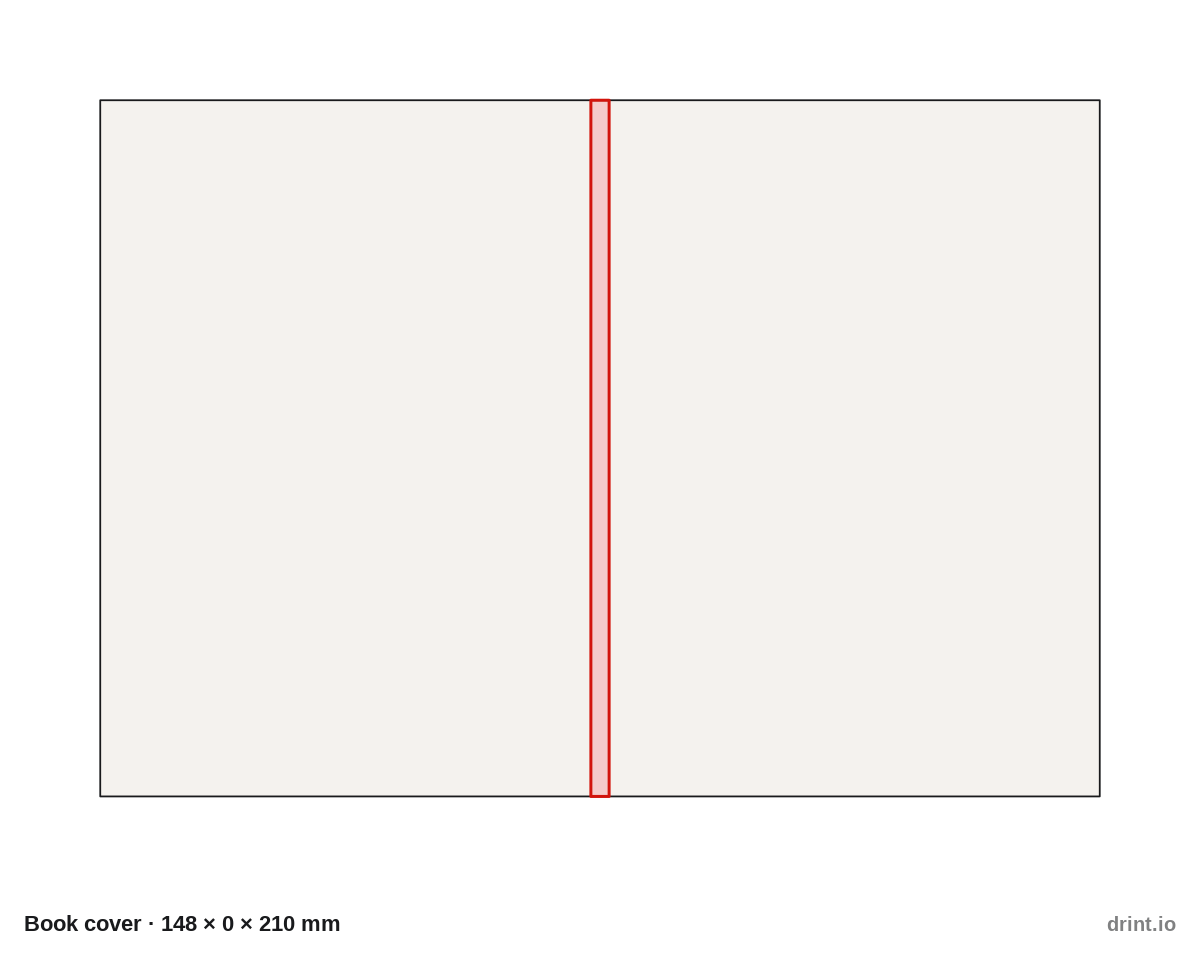
The narrow panel that joins the front and back covers of a book, folder or book-style box and faces out when it stands on a shelf.
- Also called
- backbone, book spine
- Kind
- Parts of a pack
- Where Drint finds it
- 10 of the 292 product dies Drint draws
- Drawn on
- Book cover
- Share of the Book cover blank
- 1.8%
- Measured
The spine is the hinge area of a cover: it is scored or left as a gap between boards so the cover can open, and its width follows the thickness of what it holds. On a book-style box it joins the base to the lid and often has its own board strip.
Because the spine is what people read when items stand side by side, put the name and a short identifier there. Keep text clear of the folds on either side, as small shifts in folding move the spine edges.
Questions
What is a spine?
The narrow panel that joins the front and back covers of a book, folder or book-style box and faces out when it stands on a shelf.
How many standard box styles have a spine?
Of the 1011 FEFCO and ECMA codes Drint draws, 0 have a spine, and so do 10 of its 292 product dies (bags, displays, pouches, rigid boxes…) — counted by Drint’s die engine, 2026-11-28.
Should spine text run up or down?
It is a convention that varies by market; many English-language books read top to bottom, many continental European ones bottom to top. Keep it consistent across a product line.
More terms
Cite this page: Drint (2026). “Spine”. Drint Knowledge. https://drint.io/glossary/spine