Drint Knowledge › Packaging glossary › Kiss cut
Kiss cut
A cut that goes through the face stock of a label or sticker but not the liner behind it, so the shape peels off a sheet that stays whole.
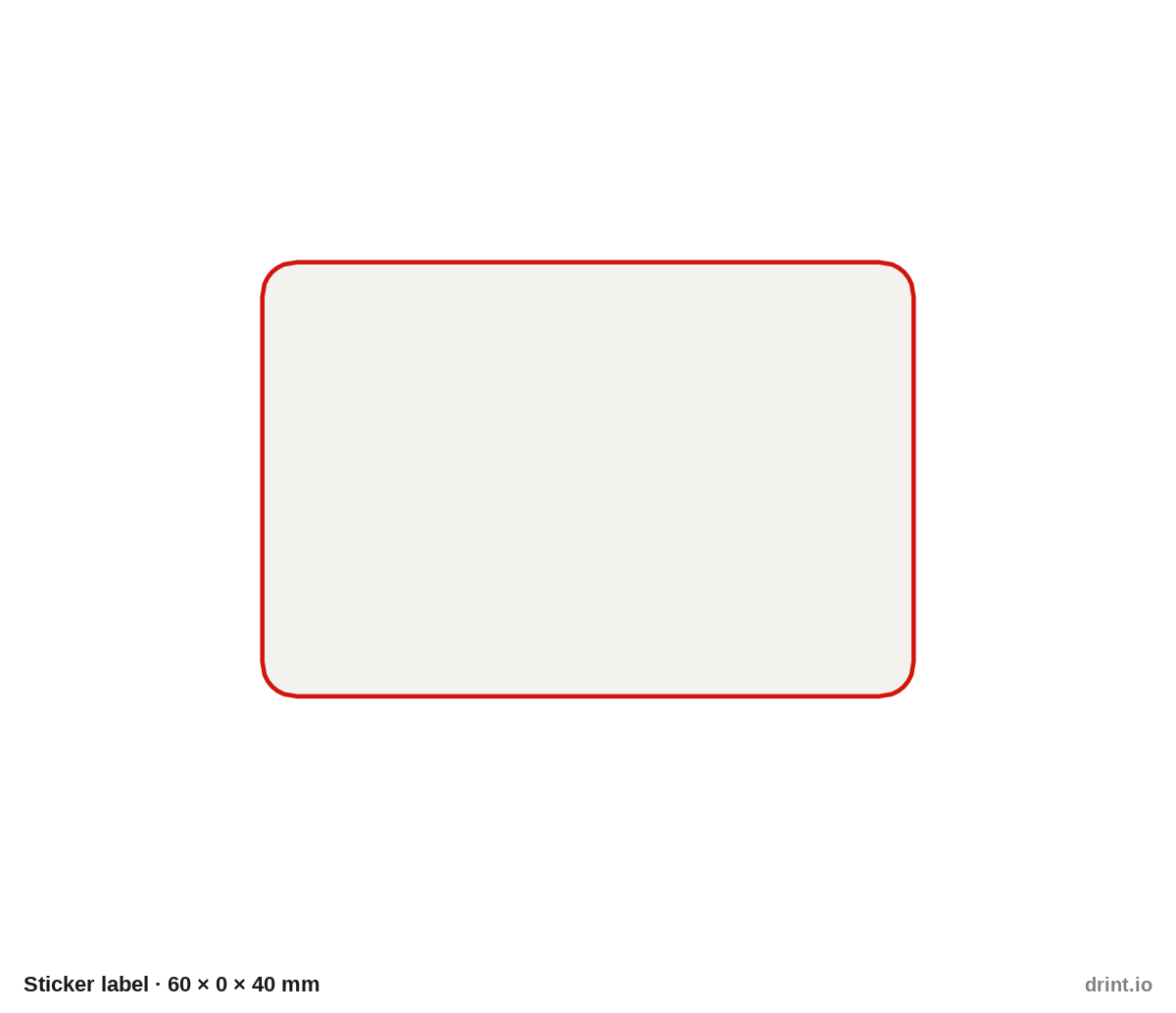
- Also called
- half cut, partial cut, kiss cutting
- Kind
- Die lines
- Where Drint finds it
- 1 of the 292 product dies Drint draws
- Drawn on
- Sticker label
- Length on Sticker label
- 0.19 m
- Measured
Self-adhesive labels are a sandwich of face paper or film, adhesive and a silicone liner. A kiss cut sets the rule or the rotary die so it just reaches the liner, which lets the waste matrix be stripped and the labels be dispensed or peeled by hand.
On the die file a kiss cut needs its own layer, apart from any through-cut that frees a sheet or a sticker sheet’s outline. Keep artwork that must not show a white edge running at least the bleed past the kiss-cut line.
Questions
What is a kiss cut?
A cut that goes through the face stock of a label or sticker but not the liner behind it, so the shape peels off a sheet that stays whole.
How many standard box styles have a kiss cut?
Of the 1011 FEFCO and ECMA codes Drint draws, 0 have a kiss cut, and so do 1 of its 292 product dies (bags, displays, pouches, rigid boxes…) — counted by Drint’s die engine, 2026-11-28.
What is the difference between a kiss cut and a die cut sticker?
A kiss-cut sticker is cut only through the face, so it stays on a larger backing sheet; a die-cut sticker is cut through face and liner, so each one is loose in its own shape.
More terms
Cite this page: Drint (2026). “Kiss cut”. Drint Knowledge. https://drint.io/glossary/kiss-cut