Drint Knowledge › Packaging glossary › Unique device identifier
Unique device identifier
A code on a medical device and its packaging that identifies the model and, often, the batch, in readable and machine-readable form.
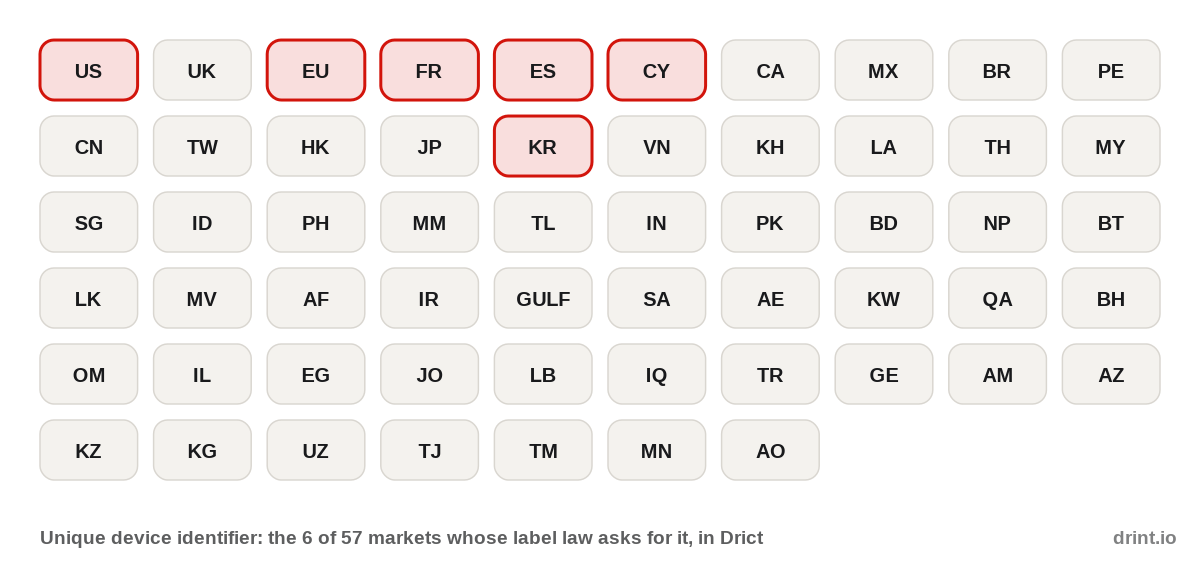
- Also called
- UDI, device barcode
- Kind
- Labels, barcodes & law
- Label laws that ask for it
- 6 of the 57 markets Drint checks
- Mandatory in
- 6
- Example
- Unique Device Identifier (UDI), plain text and AIDC, unless an exception applies (801.30) — 21 CFR 801.20, 801.40
- Measured
A unique device identifier lets hospitals and authorities track a device from maker to patient and find affected units in a recall. It has a fixed part for the model and a variable part for the batch, serial number or expiry.
Print it as human-readable text with a barcode on each pack level that the rule lists. The code is generated from the maker’s registered system, so artwork needs a placeholder and the code must be verified before the run.
Where the law asks for it
Questions
What is a unique device identifier?
A code on a medical device and its packaging that identifies the model and, often, the batch, in readable and machine-readable form.
More terms
Cite this page: Drint (2026). “Unique device identifier”. Drint Knowledge. https://drint.io/glossary/medical-device-identifier