Drint Knowledge › Packaging glossary › Alcohol strength
Alcohol strength
In short
The share of a drink’s volume that is pure alcohol, printed as a percentage.
- Also called
- ABV, % vol, alcohol by volume
- Kind
- Labels, barcodes & law
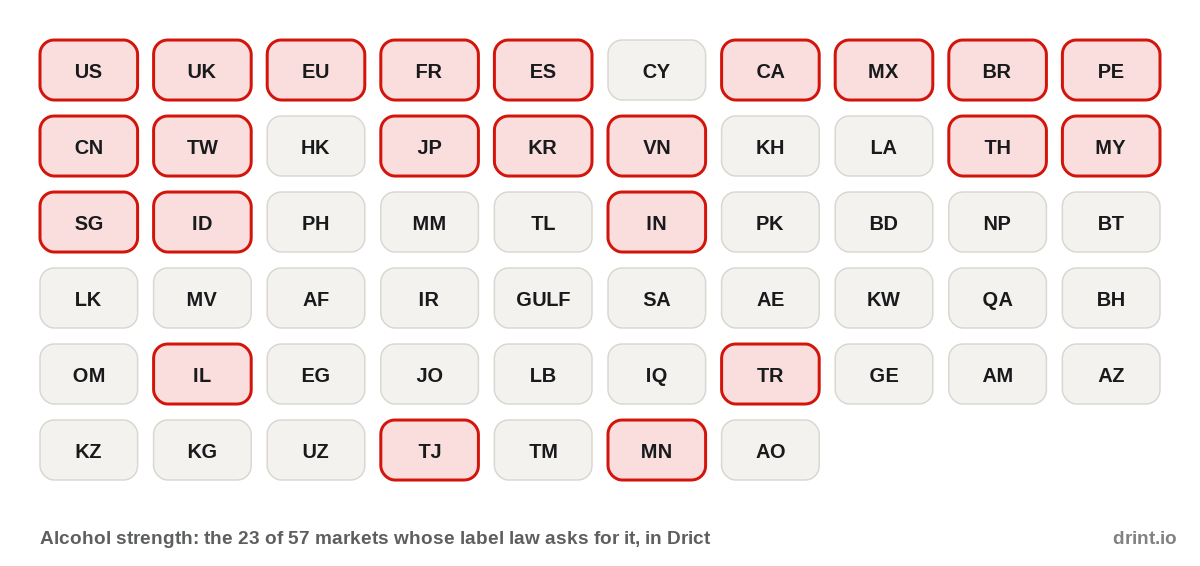
- Label laws that ask for it
- 23 of the 57 markets Drint checks
- Mandatory in
- 21
- Example
- Alcohol content (“… % alc/vol”; beer and some wines may leave it out) — 27 CFR 5.63, 4.32, 7.63
- Measured
Alcohol by volume lets drinkers compare products and tells authorities which tax and rules apply. It is written as a number followed by “% vol” or “ABV”, with a fixed number of decimals and a permitted tolerance.
Print it on the main face in a minimum height that depends on bottle size. For glass, check that the number is placed outside the area that gets the heaviest decoration or embossing.
Where the law asks for it
United StatesUnited KingdomEuropean Union (other member states)FranceSpainCanadaMexicoBrazilPeruChinaTaiwanJapanSouth KoreaVietnamThailandMalaysiaSingaporeIndonesiaIndiaIsraelTürkiyeTajikistanMongolia
Questions
What is a alcohol strength?
The share of a drink’s volume that is pure alcohol, printed as a percentage.
More terms
Product name on the labelNet quantityMetric units on labelsIngredient listQuantitative ingredient declarationAllergen declarationFragrance and allergenic perfume declarationNutrition declarationServing sizeReference intake percentage
Cite this page: Drint (2026). “Alcohol strength”. Drint Knowledge. https://drint.io/glossary/alcohol-strength