Dielines › Reverse tuck end box
Reverse tuck end box
The everyday folding carton: one glued side seam, a tuck lid at the top and another at the bottom, tucked in opposite directions.
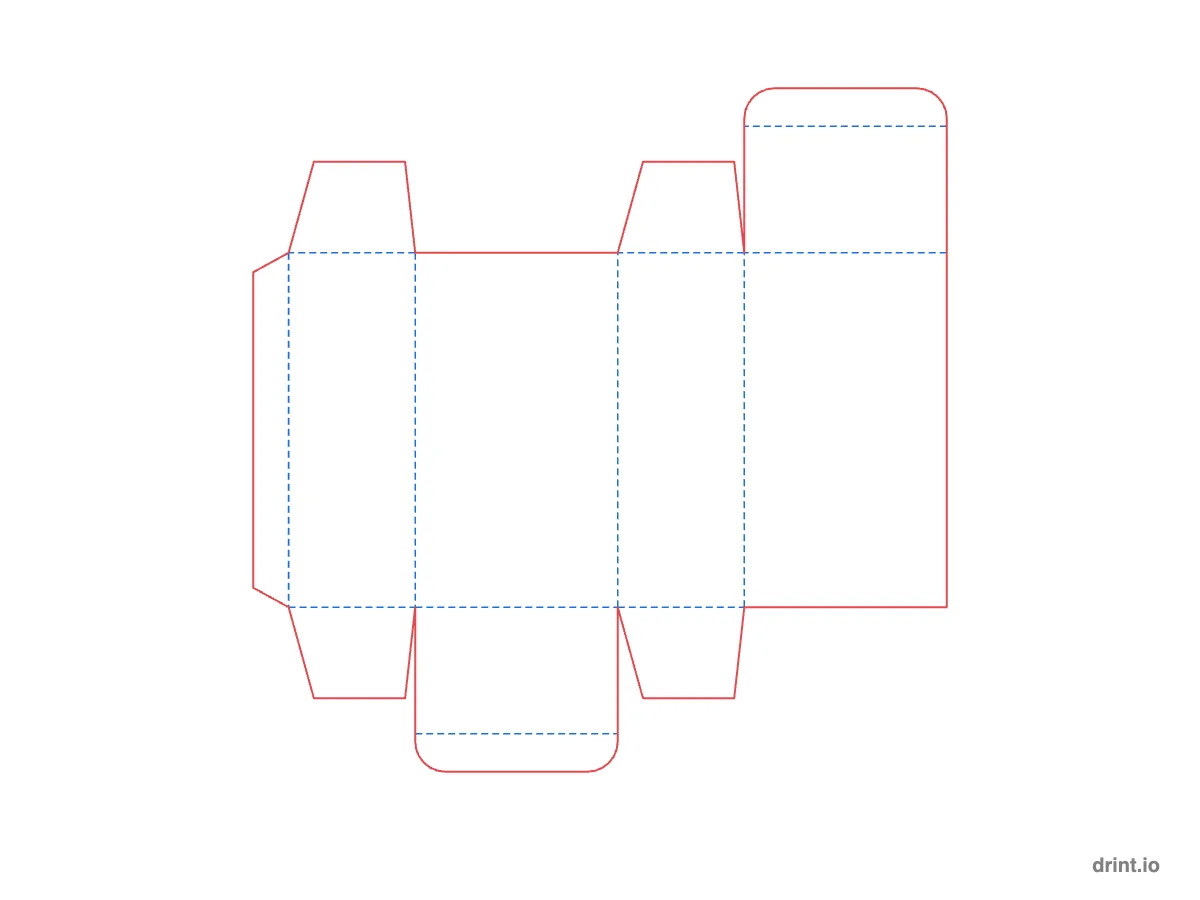
- Size
- 3.15 × 1.97 × 5.51 in (80 × 50 × 140 mm)
- Standard
- ECMA A20.20.03.01
- Flat sheet
- 10.79 × 10.63 in (274 × 270 mm)
Used for
- Cosmetics and serums
- Medicine and supplements
- Tea and coffee sachets
- Small electronics and accessories
How it is built
Four walls in a row with a glue flap, dust flaps on each end and a tuck flap that slides inside. Reverse means the top tuck hinges on the back and the bottom tuck on the front, so the sheet nests tightly on the press sheet.
Board
SBS or CRB paperboard, about 14–18 pt (250–350 gsm); laminated C1S board for a premium look.
Common sizes
Each size opens the studio on this die. Any other size works the same.
Questions
What size is this dieline?
The picture shows Reverse tuck end box at 3.15 × 1.97 × 5.51 in (80 × 50 × 140 mm; flat sheet 10.79 × 10.63 in). In Drint you type any length, width and depth — inside, on the score or outside — and the die is redrawn with the board’s caliper allowed for. Inches or millimeters: choose in Settings.
Which standard does it follow?
ECMA A20.20.03.01. The die follows that code’s drawing; you can still change the closures, the size and the board.
Can I download the dieline?
Designing on the die, the 3D fold and preflight are free in the browser. Downloading the dieline (AI, PDF, DXF, SVG, CF2) and the CMYK print PDF needs Pro.