Herbal nasal inhaler stick
Nº D-11921
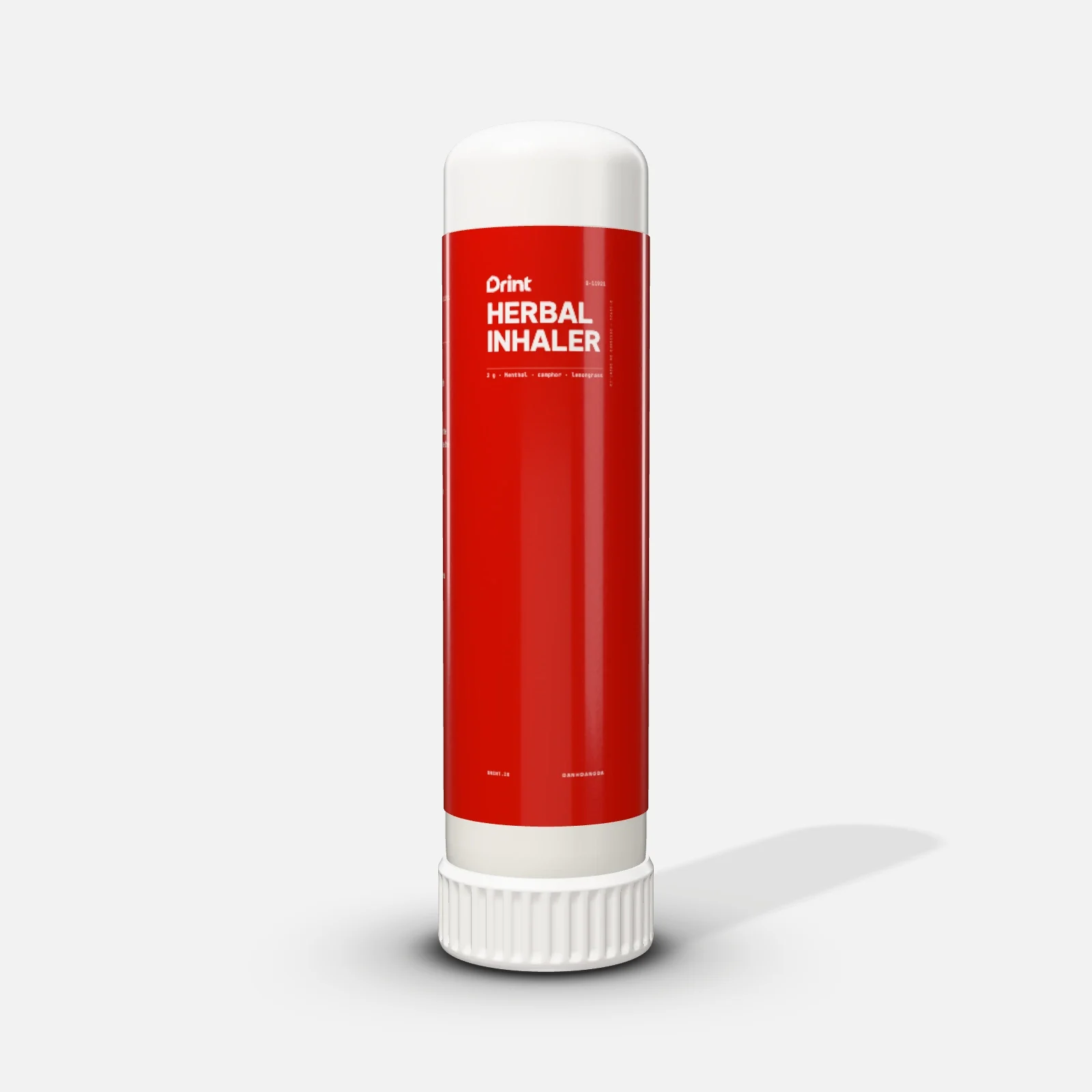
Thai yadom, menthol inhalers, essential oil inhalers — white PP tube Ø 16 × 65 mm, round-top cover, knurled base, wrap-around label.
Made for: Cosmetics, Pharma & supplements.
Sample printed on paper decal 80 gsm, gloss lamination; style: plastic jars, glass jars, bottles (labels).
Sample size Ø16 × 59.5 mm.
About this mockup
A herbal nasal inhaler stick (Thai yadom) is a white PP tube 16 mm across and 65 mm tall in four parts: the inner tube with its nozzle and knurled base, the cotton wick holding the oils, the base plug, and the long cover screwed down to the base; a decal label wraps the cover — the blank Thai herbal and OTOP brands put their own label on.
- Usually holds
- Thai herbal yadom, menthol and camphor inhalers, essential oil inhaler sticks — about 2 g a stick.
- Who uses it
- Thai herbal and OTOP brands, spas, essential oil shops, travel souvenirs.
- Popular in
- Thailand, Laos, Cambodia, Vietnam, Malaysia.
- Also searched as
- nasal inhaler mockup · herbal inhaler stick mockup · thai yadom inhaler · aromatherapy inhaler label mockup
How to use this mockup
- Start from the Ø16 × 59.5 mm sample or type your own size.
- Upload your label or artwork.
- Turn it in 3D, export a picture or video, or stage a scene.
Trade tips
- Plan the space for the required information (ingredients, dates, maker) from the start, not at the end.
- When a label wraps more than half the bottle, its two ends hide at the sides: keep key information away from them.
- Paper labels do not like water: use plastic labels for fridges and bathrooms.
- Gloss lamination deepens colours but shows fingerprints and glare under shelf lights.
Questions
Is the herbal nasal inhaler stick mockup free?
Yes, commercial use included; Free adds a watermark grid at 1K, Pro exports 4K without it.
Can I use my own size for the herbal nasal inhaler stick?
Yes — from the Ø16 × 59.5 mm sample or your own size.
Can I use the mockup pictures to sell and advertise?
Yes, on every plan including Free: use them on your website, marketplaces, social media and for clients. Pro removes the watermark and exports 4K pictures.
What is the herbal nasal inhaler stick sample printed on?
The sample is paper decal 80 gsm with gloss lamination.
Construction
This family covers HDPE/PET pill bottles, amber glass syrup and pharmacy bottles, snap ampoules, crimp-top vials, effervescent tubes, spray bottles and pens. The printed parts are a small wrap label, a cap seal and the outer carton; many have an induction liner, child-resistant cap or tear-off band. Diameters are tiny (12–40 mm), so labels have to be planned carefully or they flag.
Choosing board and material
Squeezable HDPE sprays and bottles that may get drips need flexible PP or PE film labels; 80 gsm paper labels only suit rigid, dry containers. Amber glass blocks UV for syrups, herbals and light-sensitive tablets; ampoules and vials are usually Type I borosilicate glass. Large milk powder tubs are usually HDPE or composite/tin cans with a foil seal and scoop inside.
Finishing
Pharma labels put legibility ahead of effects: matte lamination or scuff-resistant varnish, and alcohol-resistant inks if the pack is wiped. Premium supplements can take foil and spot UV on the label or carton; when information doesn't fit, use a multi-page booklet (peel-and-read) label.
Preparing the print file
Label height is limited by a short straight body, so set a clear hierarchy: product name and strength largest, then dosage form and pack size, then mandatory text at a readable size. Leave an unprinted panel where the inkjet or hot-foil coder adds lot, manufacture and expiry dates. In Vietnam, health-protection supplements must carry the statement that the product is not a medicine and does not replace medical treatment.
Common mistakes
- Cramming text onto a 20 mm vial label: type drops below 5 pt and older users can't read the dose.
- Paper labels on HDPE spray bottles: repeated squeezing wrinkles them and tears the corners.
- Solid background across the whole label with the date coded on top: the lot number disappears and QC can't read it.
- Wrapping an ampoule label all the way round or covering the dose window on a pen: users can't inspect the medicine or read the dose.
Questions and answers
Why are medicine bottles so often amber?
Amber glass or plastic blocks most UV and blue light, so syrups, essential oils, herbals and light-sensitive tablets don't degrade on the shelf.
What must a supplement label include?
Product name, ingredients and amounts, the registered claim, directions, target users, net quantity, manufacture and expiry dates, responsible company, origin, and the not-a-medicine warning required in Vietnam.
HDPE or PET for pill bottles?
HDPE is opaque, tough, a good moisture barrier and takes induction seals, so it's the standard for tablets; PET is clear and rigid with a nicer look but a weaker moisture barrier, better for sweets, lozenges and products you want to show.
Sizes available
- Ø16 × 59.5 mm